
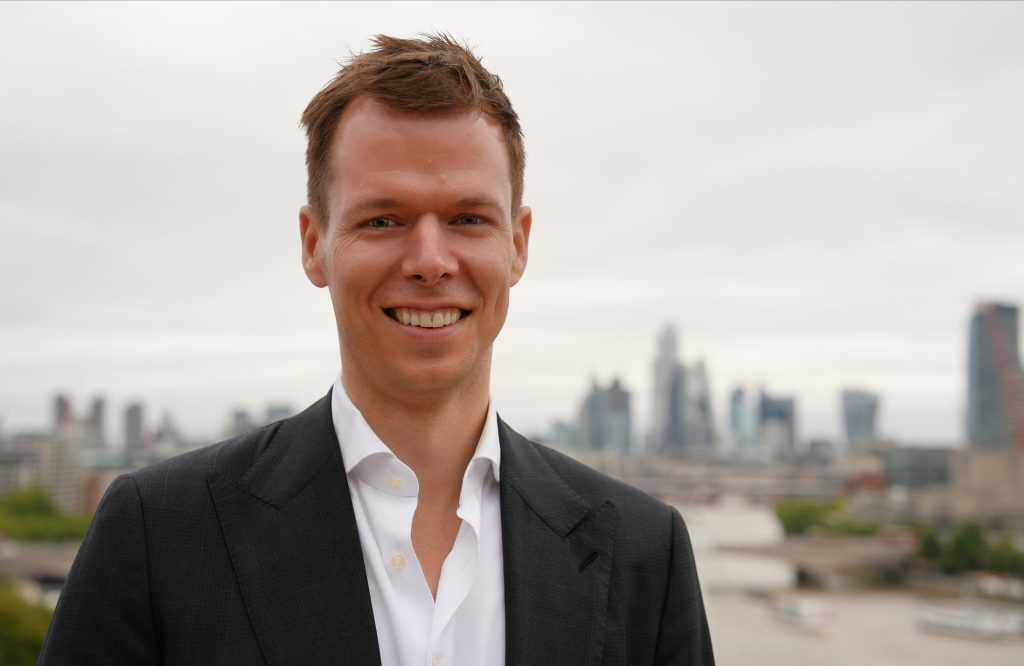
This is a busy time for Corinthia, not just because Christmas is around the corner but mainly because it is rearing to increase its footprint further. This involves much scouring and scouting, assessing, and ascertaining. For this reason, I met Guido Fredrich, the Chief Development Officer of Corinthia Hotels Limited (CHL). It was not that easy to distract him from his bustling programme, but it was indeed worth the effort.
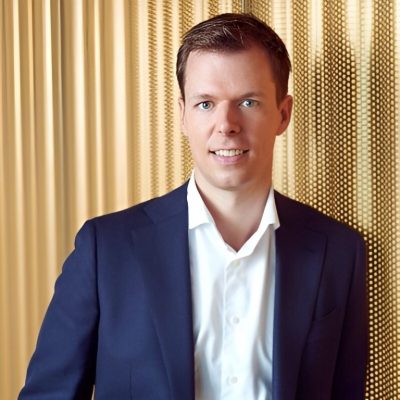
Without much ado, I centred on the main aspects of his work. “My team and I find new sites for future Corinthia-branded hotels. We structure and execute deals with the site or real estate owners, which will enable Corinthia to run the properties under long-term management agreements and leases.”
I appreciated that Guido started with an emphasis on team effort, which, in effect, reflects an important chunk of his character. I noted the thrust is not real estate purchase but management and leases. “Correct. The majority of our future deals will be management agreements and leases. So, whilst this is also a significant investment for Corinthia, it is slightly different from buying the real estate.
“Our work, therefore, involves identifying key locations and the appropriate programming for the properties, participating in commercial pitch processes against our competitors and negotiating our operating contracts. A particular focus of our day-to-day work is building and strengthening relationships with stakeholders from the global hotel real estate community and illustrating the value CHL can bring to a hotel development.”
That was quite a particular facet of hoteliering. “It differs from the operational part, which is also very interesting,” he added, indicating that this aspect had been the backbone of his work for several years.
His passion for his present work took some time to develop. “For as long as I can remember, I have had a passion for travelling and always wanted to do something involving this. As a teenager, I was set on becoming a pilot, but it later occurred to me that I wanted to interact with people. Then, I studied hospitality management in Lausanne and have never looked back. Even though I am focused on the real estate side of the organisation, I feel very connected to the operational business and really enjoy hearing and learning about our hotels.”.
Guido is well tutored and trained in his specialisation. After graduating, he started his consulting career with CBRE Hotels, a leading American commercial real estate services and investment firm. “I was there for four years and then moved to a boutique hotel real estate firm where I worked on acquisitions and asset management of the company’s hotels, mostly in London and Paris. From there, I moved to Aareal Bank in Germany, where I had a global hotel financing role (on the lending side). Following this, I joined Hyatt and spent five years in their European development team, focusing on rolling out their premium brands in the UK and continental Europe. Immediately before joining Corinthia, I was Head of Asset Strategy for a large real estate company with a few luxury hotels, several department stores, and other types of operational real estate such as restaurants and food halls.”
So why did he choose Corinthia? “I liked its determination to increase its footprint but equally loved the people. Everyone I met was and is very engaging, kind and I feel a positive and ambitious spirit in the air, which is so important for what we’re currently trying to do.”
Going back to work, what criteria is used when selecting a new location for expansion? “One of my key projects in my first months at Corinthia was creating a strategic development plan to define the key criteria under which Corinthia would want to add hotels to its portfolio. Location is a key aspect of this, and the simple answer is that we are looking for locations where our luxury customers want to travel. These are primarily international gateway cities and premium resort locations. However, one of our key advantages is that we can take an entrepreneurial approach and look at locations opportunistically, meaning that we make sure that we evaluate each potential location on a case-by-case basis and then take a view as to whether we can make it work for a luxury hotel.”
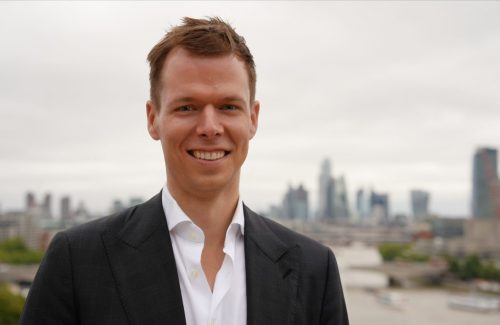
I wondered which skills Guido considered essential for his work, “Strong analytical and financial skills, excellent negotiation and communication skills, in-depth knowledge of the hotel industry, leadership capabilities, creative and strategic vision. These are all essential skills you require. However, I would say the key is dealing with people and building and maintaining relationships. Technical skills are important and can be acquired, but an intuitive ability to listen to partners and colleagues and to find compromises in challenging situations, along with a good network, is what stands out for me and what I look for in my team members. Much like the operational business, the development part brings people together and creates structures where everyone gets what they need, which requires empathy and interpersonal skills.”
Moving on to something else: from the eight hotels in Corinthia’s pipeline, four will include branded residences. Does this reflect a growing interest in branded residences? Guido was emphatic in his answer. “Yes, definitely. Branded residences are getting increasingly popular globally, particularly in the Middle East. They are a great addition to a hotel product, enabling a brand to add further value to a development by helping the owners sell their residences at a premium. The hotel also benefits the occupiers of the residences who tend to use the hotel and its services. It’s a real win-win, and we would be delighted to do more branded residential projects in locations with sufficient demand. “
Asked whether he envisaged emerging trends impacting hotel development in the next few years, Guido surprised me with his simple but precise response. “The most important aspect here is the strength of the underlying product and the brand’s track record. We are making great progress in this field, particularly with the opening of the new hotels, so I think we are well-positioned to reap the rewards in the years to come. Sustainability is definitely a topic that is becoming more and more important. It features much more heavily in nearly all our processes and is something owners actively ask for.”
Guido had once stated “People are prepared to spend more on experiences and memories.” I asked him to expand on this. “This ties in with the general shift in consumer buying behaviour that we have seen in recent years, especially in the luxury business. People tend to invest in experiences and memories rather than hardware, meaning they are looking for a great, memorable time (mostly with friends or family) rather than for things. It does not mean that people don’t buy things/hardware anymore, but it means that the service aspect of luxury products is becoming increasingly important. This is challenging because these parts of the product are intangible, but it’s great for luxury hotels and where a competent operator can show added value. It is also this area where each of our team members can make a difference in our customers’ lives, whether that’s the team members at the hotel or my team in a situation where we are making it easy and pleasant for owners to work with us.”
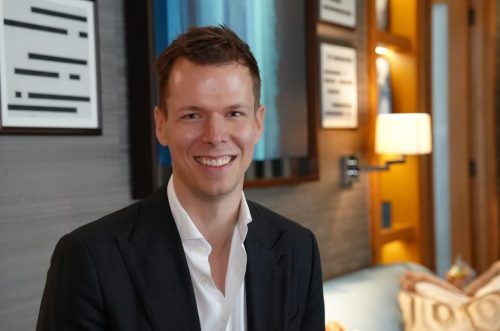
I noted that Guido mentioned his team again. He shared an acknowledging smile. ‘I am essentially a team player and enjoy supporting my team members and other colleagues in achieving their goals. Their goals reflect mine just as much as my goals reflect theirs. All our goals are intertwined, and teamwork fuses them pleasantly.’
I had heard from reliable sources that he was very reliable, hard-working and honest. And what about a sense of humour? He chuckled. “I would also like to think I have a sense of humour, but it’s often misunderstood. It may well be my German heritage showing itself.” What about Guido’s outside work? ‘I really enjoy travelling and spending time with friends. I’m a big foodie and love discovering new places to eat and drink. I also have a passion for the arts and enjoy working out. I like spending time by the sea and being in the water. Surfing is a particular favourite for me, but unfortunately, I don’t get to do much of it.’
Looking at the present, what did he consider the biggest challenges currently faced in hotel development? ‘There are a few, and they constantly change and evolve. The various challenges (political, environmental, etc.) that our operating business is dealing with impact us as well, and we are seeing increases in development costs, which puts additional pressure on the hotels to generate even higher income levels than before. I would say the biggest challenge for us, currently, is the very high degree of competition from other luxury brands. Our peers are all focused on expanding their footprint; they are almost always looking at the same sites we are considering and they have strong and established brand names which resonate with owners.”
And the future? Is the next decade too far to envision? ‘Not at all; time flies. Over the next decade, we will be working hard to establish Corinthia as a key player in the global luxury hospitality industry, and we will be looking to bring the brand to even more exciting destinations across the world. Realistically, we will see a focus on Europe, the Middle East and North America in the immediate future.
“I’m excited to be here and look forward to working with more and more colleagues and helping the company grow in the future.”