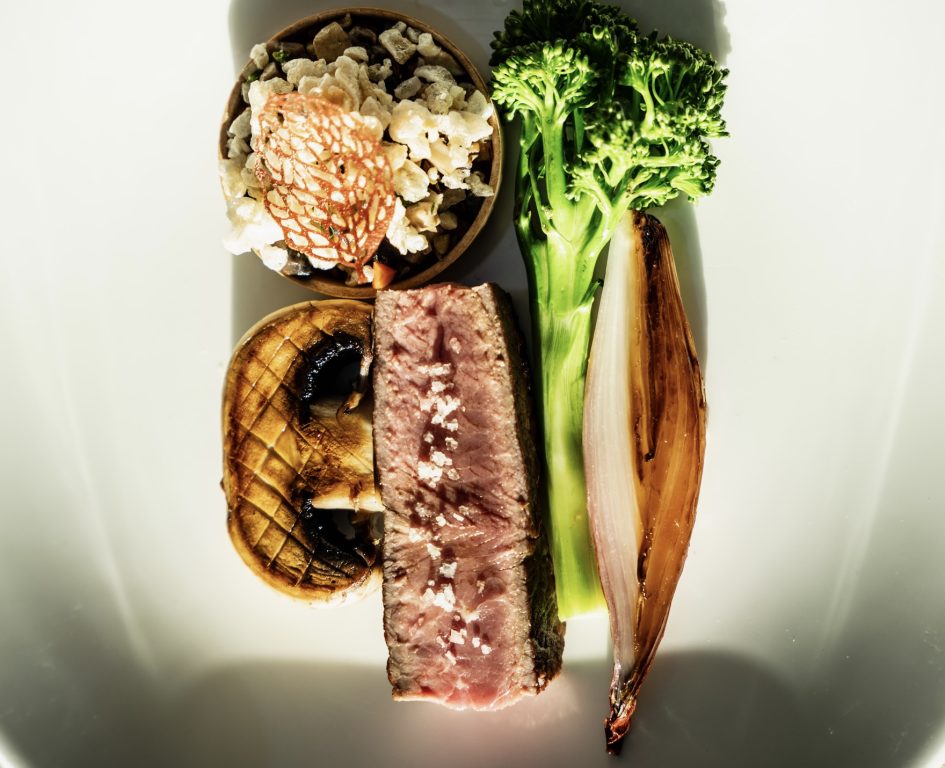


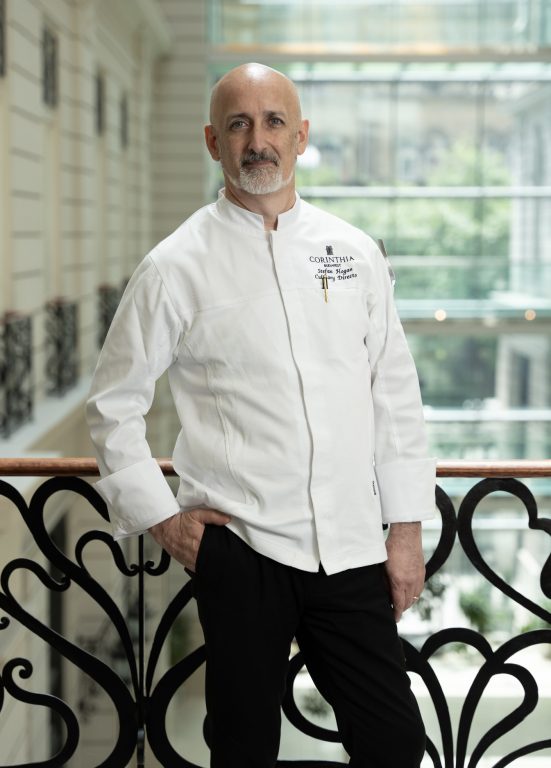
Earlier this year, Stefan Hogan moved from Executive Chef of Corinthia Palace Hotel in Malta to Corinthia Budapest as Culinary Director. He carries with him a treasure chest of 31 years of Corinthian experiences – a trophy, which he bears with pride. Stefan has the overall responsibility for the smooth running of the food operations. “It is a multifaceted job that encompasses the hiring, training, development, and talent nurturing of the kitchen team. Overseeing the stock management, ordering, preparation, and production of all foods within the various kitchens. Monitoring of hygiene and good food safety practices.” Stefan admits that his main challenge is his inability to switch off from the kitchen mode, adding with a smile , “I guess I am too old to change that now.”
Always busy, forever working towards a deadline, juggling the multiple disciplines of a chef! “There is a simple method to manage high-pressure situations during peak hours: heads down and focus. This is where discipline comes into its own. But you develop a knack for wearing different hats for different situations to deal with the various topics on the agenda. “
I wondered how he handled menu creation or, as now called, menu engineering. “It’s often a mix of the creative and the pragmatic. It is imperative to write a menu based on client preferences (which comes from reports from the past sales), kitchen equipment and available talent. A menu is a balance of crowd pleasers, classics and dishes that are appealing to the creative aspect to help keep chefs engaged. The menu pricing then needs to reflect market perceptions and balance out dishes that are high profit vs low yielding. Every menu change requires research and ensuring that any available data is considered to tweak and improve the overall performance.”
Staff management and training are high in Stefan’s agenda. “I have reached a point in my career where I feel that one of my most important responsibility is to pass on my acquired knowledge to the new generation of chefs. I am a firm advocate that professional behaviour breeds more professional behaviour and I endeavour to instil in the kitchen management team the importance of self-discipline. This is how a culture of strong work ethics is built and maintained. I love cooking with the team and showing them new techniques and dishes as our industry is forever evolving and you can never know enough. There is always something new to learn.”
So how does he tackle this continuous need to remain in touch within culinary trends? “I love reading, watching podcasts of other chefs and restaurants. I love experimenting and I pass much of my time at home browsing online platforms that promotes culinary knowledge. When creating menus, I look at trends in London mainly, as truly it has become a culinary destination.”
Kitchens are nowadays run along HACCP principles, that is Hazard Analysis Critical Control Points. Aware that Stefan was a fervent follower of these principles, I asked him to explain these principles to our readers. “HACCP is a farm-to-table concept initially devised by NASA when they were studying how to ensure safety of the astronauts’ food. Essentially, it is a system devised for the monitoring and documenting process to ensure that critical control-points at every stage of the food journey are followed and documented to fall within established parameters. This would include the process of temperature-controlled transportation, storage, defrosting, cooking and serving. It also covers aspects like the correct sanitisation of fruits and vegetables, the probed core temperature of cooked foods. For the chefs, it covers aspects like the correct use of colour coded chopping boards to minimise the possibility of cross contamination, hand washing discipline, dating and coding of prepared foods. Stock rotation, clean-as-you-go practices and discipline in the segregation of food items at storage level.”
One constant is surely ensuring food quality and consistency. How did Stefan manage this? “Self-discipline is essential in this area. It is imperative to have recipes, and standard operating procedures of how dishes need to be prepared, cooked, and served. It is important that the necessary training and follow-up is ongoing to keep monitoring quality and consistency. One of my mantras is taste everything as that is the only way a chef will develop self-discipline in the pursuit of consistency.”
Naturally complaints do crop up. “Every complaint is to be taken seriously. I always look at feedback in a positive manner. Whenever we serve a plate of food we must be ready to be judged. I always say to myself that there is always a lesson to be learnt. I always deal with a complaint as a collective responsibility and an opportunity for the kitchen team to learn what we can do better.”
Sustainability has now grown into a management pillar. What role does it play in Stefan’s kitchen. “I always like to source locally where I can. And in my new post in Budapest, I am slowly increasing the number of smaller local suppliers that are promoting Hungarian produce. One of my pet hates is wastage and whenever I explain this topic to the kitchen it is not primarily from a financial aspect, but I am a firm believer that waste is disrespectful to the food chain and as chefs we have a moral obligation to ensure that as little as possible ends up in the bin. One of the signs of a good chef is creating menus that utilise as much as possible of the purchased ingredients and with today’s available knowledge there is so much that can be done. One of my favourite restaurants that I follow online is Silo in London; they have a zero-waste kitchen concept and all ingredients are utilised as they have a fermentation laboratory to create garums.”
I suggest readers should surf their way across the internet to read about garums and their ancient/modern applications. Very interesting stuff!
Does technology play a part in modern kitchen operations? “I am an advocate of new technologies to improve processes and help us minimise wastage. An example is a new AI assisted system that we are looking at to help us examine what is being discarded both in the kitchen and by the client. This will help us refine the produce, production, preparation, portion, and possibly quality.”
Surely, creativity is essential in the culinary art. How did Stefan foster creativity in his team? “I resort to the age-old human invention: dialogue. I actively promote an open dialogue when writing menus, giving the team the opportunity to have their input of how dishes can be best presented to showcase the produce. Dialogue also helps me spot new sprouting talent.”
“You see, I also have the pleasurable duty of spotting new talents and aspiring chefs. The best advice I share is that cooking should forever be a labour of love, and exhort them to always be inquisitive and have a yearning to learn more, see more and taste more.”
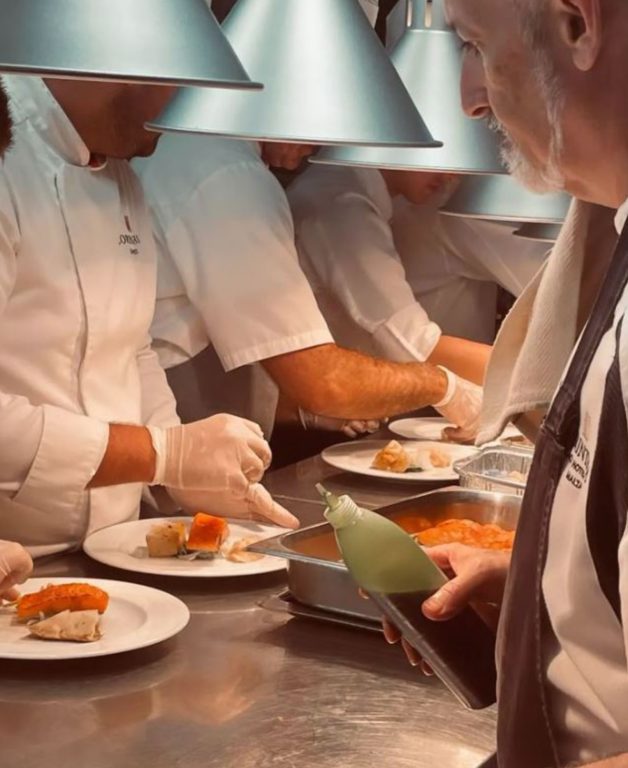
But the journey is essentially one to be lived as team. “Teamwork is the very foundation of a successful kitchen. Everyone is working on different aspects of a meal and it all needs to come together flawlessly to ensure a consistent product. We work in a fast-paced and sometimes highly stressful environment so the need to have a mutual understating of the jobs at hand and how to work together in unison and harmony is an essential aspect of a successful kitchen.”
Stefan can be compared to the conductor of an orchestra who joins the separate efforts of the musicians into one coherent result. But he does more than join efforts. He leads by example.
Do customers play a role in the kitchen? “Yes, certainly. All feedback is discussed and audits are followed in team meetings and cascaded to the team. We need to share with the brigade what the customer sentiment is on our product and delivery standards. It’s the way we grow and move the product forward. I like to run a structured kitchen where decisions are customer centric.”
I was eager to know what challenges Stefan faced regarding dietary trends, such as veganism, gluten-free etc. He chuckled softly. “I never look at dietary menus as a challenge. I love cooking meals that are equally delicious and visually appealing as a protein centric menu. I enjoy the process of cooking plant-based food as it is a trend that will continue to grow in the years to come.”
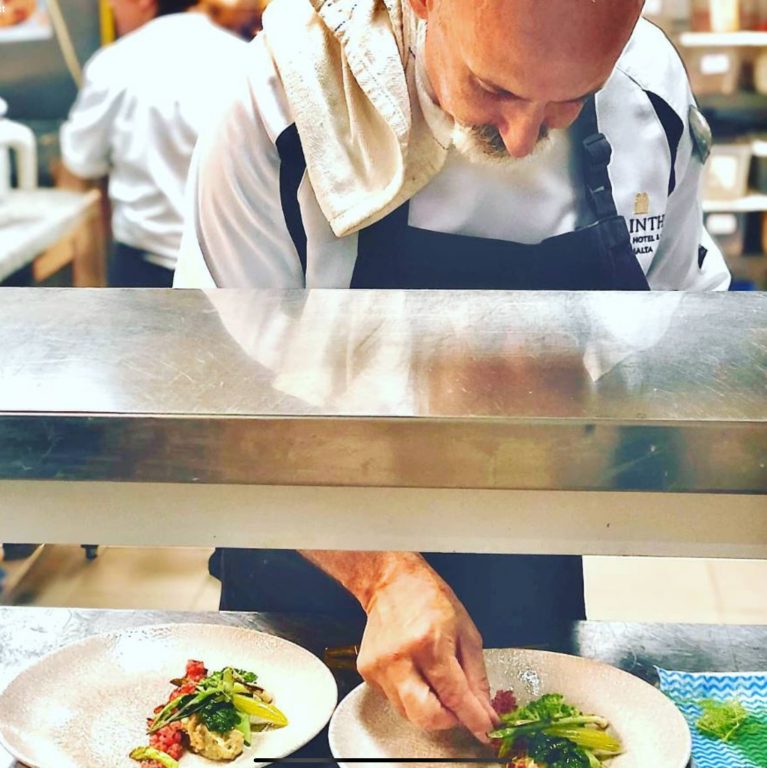
One thing which baffles me is how does one handle menu pricing? “I like to get a clear idea of market pricing, competition pricing and dish perception as this is how to best get a pricing policy on dishes to ensure that all items on the menu can appeal to the customer. Finally, we also have a group meeting to discuss the cost of dishes, profitability, and what our target client would be happy to pay for certain dishes.”
And one last comment, please! “This is a competitive and evolving scenario but some factors should remain constant: love, dedication and the grit to move forward to reach new horizons, always with our customers’ satisfaction in mind.” What a heartfelt conclusion!